Why Is Formaldehyde in Furniture Harmful?
Why Is Formaldehyde in Furniture Harmful?
You buy new furniture for your living room, enjoy the fresh look of the interior — and you don’t even realize that along with it, an invisible enemy sneaks into your home. Formaldehyde in furniture is a problem that is far too rarely discussed. It should be talked about loudly, because this toxic gas has a real impact on your health and your family’s health.
What Is Formaldehyde?
Formaldehyde (CH₂O) is an organic chemical compound commonly used as an ingredient in adhesive resins for producing furniture panels — MDF, HDF, plywood, and particleboard. It is classified by the World Health Organization (WHO) as a carcinogenic substance for humans.
How Does Formaldehyde Enter Your Home?
Standard furniture panels are produced using urea-formaldehyde (UF), melamine (MF), or phenol-formaldehyde (PF) resins. These adhesives release formaldehyde throughout the entire lifespan of the furniture — not just right after purchase, but for years. This process intensifies at high temperatures and elevated humidity.
Health Effects of Formaldehyde Exposure
Even low concentrations of formaldehyde in the air can cause:
- Respiratory irritation — coughing, runny nose, shortness of breath
- Skin problems — eczema, allergic reactions
- Headaches and chronic fatigue — often confused with stress
- Eye irritation — burning, tearing
- Increased risk of cancer — with long-term exposure
Children, the elderly, and allergy sufferers are particularly vulnerable. This is because formaldehyde has a density similar to air — it lingers in rooms, and we inhale it constantly without even knowing.
Formaldehyde and European Standards
The European Union’s E1 class permits formaldehyde emissions of up to 0.1 ppm (parts per million). Sounds low? It’s still a toxic substance being emitted in your home. E1 class is a minimum, not a health guarantee.
Is There an Alternative?
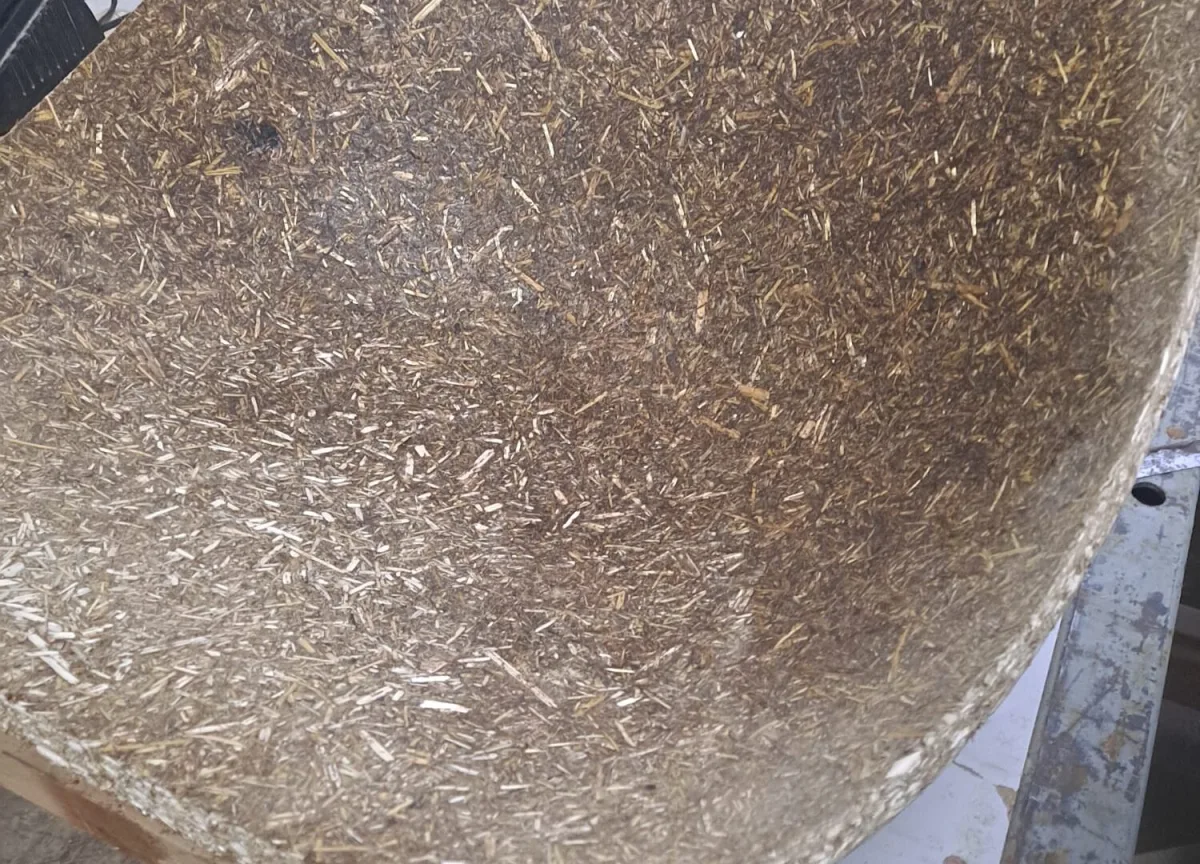
Yes. Formaldehyde-free panels are not the future — they are the present. BioPly produces ecological furniture and structural panels from plant fibers — cereals and hemp — bonded with a protein-based adhesive resin. Zero formaldehyde. Zero carcinogenic substances. Harmless emissions throughout the entire service life.
What Can You Do Today?
- Check what materials your furniture is made of
- Look for E0-class panels or certified ecological alternatives
- Ventilate rooms regularly
- When making your next purchase — ask the manufacturer about the composition
Healthy furniture is not a luxury. It’s a conscious choice.